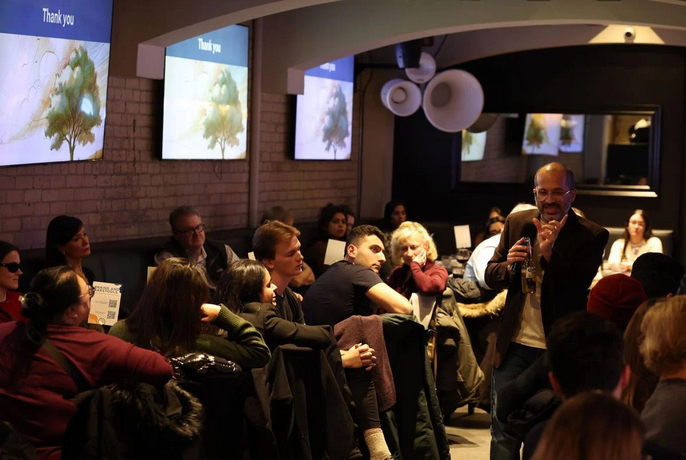
Professor Michael Inzlicht is featured in a recent Toronto Star article about Toronto’s growing “edutainment” scene.
The article says that there is a growing appetite for bringing lectures into local bars, where young professionals gather to learn, connect, and share ideas over food and drinks. Events like Brains & Barstools blend casual socializing with talks from experts on topics ranging from AI empathy to literature and politics. With weekly sellouts, these gatherings highlight a rising interest for community, curiosity, and meaningful conversation.
Asked why he was interested in participating in the event, Professor Inzlicht is quoted as saying: "I like beer, and I like talking to people." Adding: "I suspect there were fewer people here on their phones than in a typical lecture of mine."

My work was uplifting people, or so I told myself. Looking back, I suspect that feeling like I was on the right side of history was a kind of moral cover. Maybe I felt less wrong about the p-hacking because I was promoting social justice. The conclusions I drew were what the good guys already believed, after all. However, a scientist who wants to change the world in a particular direction is no longer beholden to the truth. They are beholden to a cause. I certainly was.
Read More