• Home
  • About
  • Research
  • Publications
    • Articles and Chapters
    • Books
  • News
  • Lab
    • People
    • Information for Students
  • BLOG
  • Teaching
  • Contact

Michael Inzlicht

  • Home
  • About
  • Research
  • Publications
    • Articles and Chapters
    • Books
  • News
  • Lab
    • People
    • Information for Students
  • BLOG
  • Teaching
  • Contact
publications.jpg

Articles and Chapters


Publications

  • All Articles
  • In Press
  • 2026
  • 2025
  • 2024
  • 2023
  • 2022
  • 2021
  • 2020
  • 2019
  • 2018
  • 2017
  • 2016
  • 2015
  • 2014
  • 2013
  • 2012
  • 2011
  • 2010
  • 2009
  • 2008
  • 2007
  • 2006
  • 2005
  • 2004
  • 2003
  • 2002
  • 2001
  • 2000

Viewing entries in
2002

Sex Differences in Response to Physical and Social Factors Involved in Human Mate Selection: The Importance of Smell for Women (PDF)

April 10, 2015

Herz, R., & Inzlicht, M. (2002). Evolution and Human Behavior, 23, 359-364

Tags: gender differences, smell, mate selection, evolutionary psychology

Filter By Keyword

  • neuroscience
  • self-control
  • emotion
  • motivation
  • ego depletion
  • cognitive control
  • effort
  • ERN
  • anterior cingulate cortex
  • prejudice
  • empathy
  • stigma
  • meaning
  • replication
  • stereotype threat
  • experience sampling
  • self-regulation
  • decision making
  • meta science
  • uncertainty
  • artificial intelligence
  • religion
  • cognitive dissonance
  • education
  • fatigue
  • morality
  • acceptance
  • prosociality
  • mindfulness
  • political psychology

Subscribe to Getting Better

Enter your email address to receive new posts from Michael's blog, "Getting Better".

We respect your privacy.

Thank you!

News

Featured
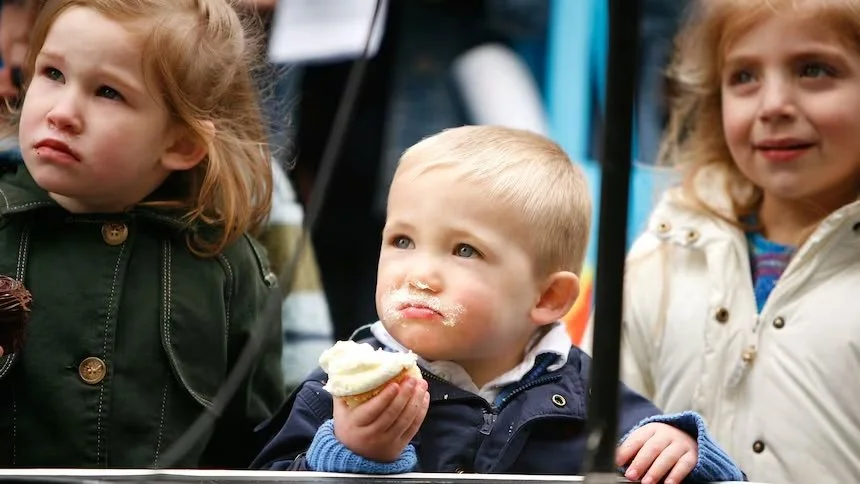
The AI Empathy Paradox: Customers Reject The Help They Say They Prefer

When researchers asked people whether they’d rather get an empathetic response from a human or from AI, human responses won by a wide margin. When the same researchers actually showed them the responses, AI won by a wider one. People who said they preferred human responses rated the AI replies as more empathetic, more validating, and even better at making them feel heard.

The most recent evidence comes from a Penn State and University of Toronto team led by Joshua Wenger, published in January in Communications Psychology. Across four studies, participants were given the choice between receiving an empathetic response from a human or from ChatGPT. They picked humans 57% to 62% of the time.

Read More

Mental health awareness campaigns can have unintended consequences

A 10-year-old girl watches YouTube with a friend during their after-school program. An ad pops up. A two-minute quiz can tell her if she has ADHD. She takes it, of course. And just like that, she comes home to talk to her child psychiatrist dad about how she has ADHD.

This story is not unique. Mental health awareness has become one of Canada’s most visible public health projects. The messaging is everywhere: Bell Let’s Talk, school wellness e-mails, workplace campaigns, social media initiatives.

Yet despite these efforts, population-level mental health keeps declining. Medication use is increasing. How can this be?

Read More

Higher Learning at Happy Hour

Professor Michael Inzlicht is featured in a recent Toronto Star article about Toronto’s growing “edutainment” scene. 

The article says that there is a growing appetite for bringing lectures into local bars, where young professionals gather to learn, connect, and share ideas over food and drinks. Events like Brains & Barstools blend casual socializing with talks from experts on topics ranging from AI empathy to literature and politics. With weekly sellouts, these gatherings highlight a rising interest for community, curiosity, and meaningful conversation.

Asked why he was interested in participating in the event, Professor Inzlicht is quoted as saying: "I like beer, and I like talking to people." Adding: "I suspect there were fewer people here on their phones than in a typical lecture of mine."

Read More Here

Collaborators

  • Joshua Aronson, New York University
  • Avi Ben-Zeev, San Francisco State University
  • Elliot Berkman, University of Oregon
  • Kirk Brown, Virginia Commonwealth University
  • Daryl Cameron, Penn State University
  • Belle Derks, Utrecht University
  • Jennifer Gutsell, Brandeis University
  • Greg Hajcak, Florida State University
  • Eddie Harmon-Jones, University of New South Wales
  • Jacob Hirsh, University of Toronto
  • Cendri Hutcherson, University of Toronto
  • Sonia Kang, University of Toronto
  • Michael Larson, Brigham Young University
  • Lisa Legault, Clarkson University
  • Ian McGregor, University of Waterloo
  • Marina Milyavskaya, Carleton University
  • Sukhvinder Obhi, McMaster University
  • Liz Page-Gould, University of Toronto
  • Travis Proulx, Cardiff University
  • Blair Saunders, University of Dundee
  • Brandon Schmeichel, Texas A&M University
  • Zindel Segal, University of Toronto
  • Alexa Tullett, University of Alabama

University of Toronto

  • Department of Psychology Scarborough
  • Department of Psychology St. George
  • Social Personality Research Group
  • University of Toronto
  • University of Toronto Library

Organizations

  • Association for Psychological Science
  • Canadian Psychological Association
  • Canada Foundation for Innovation
  • International Social Cognition Network
  • International Society for Research on Emotion
  • National Academy of Education
  • Natural Sciences and Engineering Research Council of Canada
  • Social and Affective Neuroscience Society
  • Social Psychology Network
  • Social Sciences and Humanities Research Council
  • Society for Personality and Social Psychology
  • Society for Psychophysiological Research
  • Spencer Foundation

Research Applications

  • Calculating Confidence Intervals
  • Effect Size Calculator
  • Meta Analysis Calculator
  • P-checker
  • P-curve


Top

Image Credits

  • Brain Icon by Anisha Varghese at the Noun Project
  • Header image by Michael Häusser
  • About image by aLansong!
  • Header image by ZEISS Microscopy
  • Map of Toronto by StamenDesign PrettyMaps
  • © 2014 - Michael Inzlicht
  • Designed and developed by ScienceSites: websites for scientists